For contractors, builders, and project specifiers, skirting boards (or baseboards) are far more than a historical architectural detail. They are a **critical interface component** in modern construction, solving practical building challenges while defining the final aesthetic grade of an interior. Understanding their evolution, function, and material science is key to specifying the right solution for commercial durability and design intent.
What Is Skirting? A Definition Rooted in Function
Skirting is a linear profile installed at the junction of the wall and the floor. Its core definition in professional construction is: a permanent or semi-permanent trim that protects the wall, conceals necessary expansion gaps and service runs, and provides a clean, finished transition between vertical and horizontal surfaces.
While its decorative role is undeniable, for B2B clients, the primary value lies in its performance characteristics: impact resistance, moisture management, and installation efficiency.
The Evolution: From Medieval Gap-Hider to Modern System Component
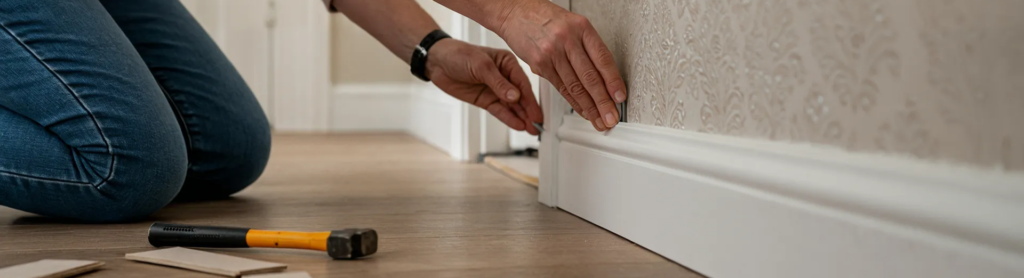
Skirting originated in medieval European stone buildings to conceal uneven gaps between non-straight walls and floors, providing draft proofing. By the 17th-18th centuries, it evolved into ornate wooden displays of status.
Today, its role has transformed with modern building methods:
Gap Management: It now primarily conceals the mandatory expansion gap for floating floors (laminate, LVT, engineered wood), which is non-negotiable for proper installation.
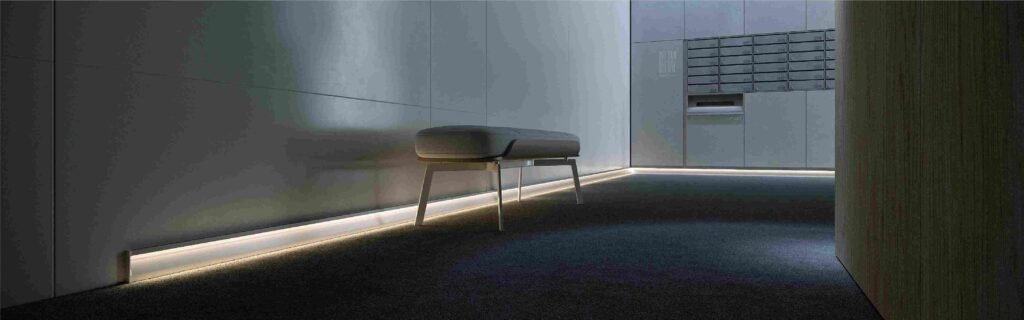
Service Integration: Modern profiles often include channels or back-side rebates to neatly route low-voltage wiring, data cables, or small-diameter plumbing, eliminating costly wall chasing.
Commercial-Grade Protection: In high-traffic areas like hospitals, schools, and offices, skirting acts as a sacrificial armor, absorbing impacts from carts, furniture, and cleaning equipment that would otherwise damage drywall or plaster.
Why Skirting is Non-Negotiable in Professional Specifications
Functional Imperatives:
Wall Protection: Creates a durable buffer zone against scuffs, dents, and moisture at the most vulnerable part of the wall.
Sealing & Hygiene: Forms a cleanable seal that prevents dust, debris, and pests from accumulating in the wall-floor junction. Waterproof variants (PVC, aluminum) are essential in wet areas.
Tolerance Absorption: Covers minor irregularities in floor flatness or wall straightness, ensuring a perfect finish without unrealistic substrate perfection.
Commercial & Aesthetic Value:
Professional Finish: Signals a completed, high-quality installation. A crisp skirting line defines the space and elevates perceived craftsmanship.
Design Flexibility: Available in profiles from minimalist to traditional, it can be specified to blend in or make a bold design statement.
Lifecycle Cost Reduction: Durable skirting reduces long-term maintenance and repainting costs, a key selling point for facility managers and property owners.
Types of Skirting Boards: A Material Selection Guide for Projects
The choice of material dictates performance, cost, and suitable applications. Here is a breakdown geared toward project specification:
- MDF (Medium-Density Fibreboard)
Profile: The standard for residential and light commercial painting. Affordable and stable.
Best For: Dry, low-traffic interior areas where a painted finish is acceptable. Limitation: Highly susceptible to moisture damage and impact.
2. Solid Wood (Pine, Oak, etc.)
Profile: Traditional and high-end aesthetic. Can be stained to show natural grain.
Best For: Luxury residential, hospitality, and heritage projects. Limitation: Requires skilled finishing, prone to warping in humid environments, higher cost.
3. PVC/UPVC Skirting
Profile: The practical workhorse. 100% waterproof, flexible, and easy to install.
Best For: High-moisture areas (bathrooms, kitchens, basements), rental properties, healthcare facilities, and projects with tight budgets/timelines. Offers excellent value and functional performance.
4. Aluminum Skirting (Powder-Coated or Anodized)
Profile: The modern, high-performance standard. Extremely durable, dimensionally stable, corrosion-resistant, and zero-maintenance.
Best For: Commercial projects (offices, retail, hotels), modern residences, high-traffic public spaces, and areas demanding a sleek, contemporary look. Provides the best long-term durability and return on investment.
Profile: The premium specification for extreme environments.
Best For: Laboratories, commercial kitchens, hospitals (surgical areas), industrial settings, and luxury design statements where ultimate hygiene and strength are required.
Specification Checklist for Professionals
Environment: Is it a wet area, high-traffic zone, or dry office?
Substrate: What is the wall construction (drywall, plaster, concrete)? What is the floor type?
Height & Profile: Commercial spaces often use taller profiles (150-200mm) for proportion and protection. Modern design favors slim, minimalist profiles.
Fixation Method: Adhesive, mechanical fasteners, or clip-system? Ensure compatibility between fasteners and skirting material (e.g., use stainless steel screws with aluminum to prevent galvanic corrosion).
Access Requirements: Does the design require future access to concealed cables or pipes?
Conclusion: Specifying for Performance and Partnership
Skirting is a fundamental building system component. Moving beyond viewing it as a simple finishing trim to understanding it as a performance interface is what separates standard projects from exceptional ones.
Partner with a Manufacturer Engineered for Professional Demands.
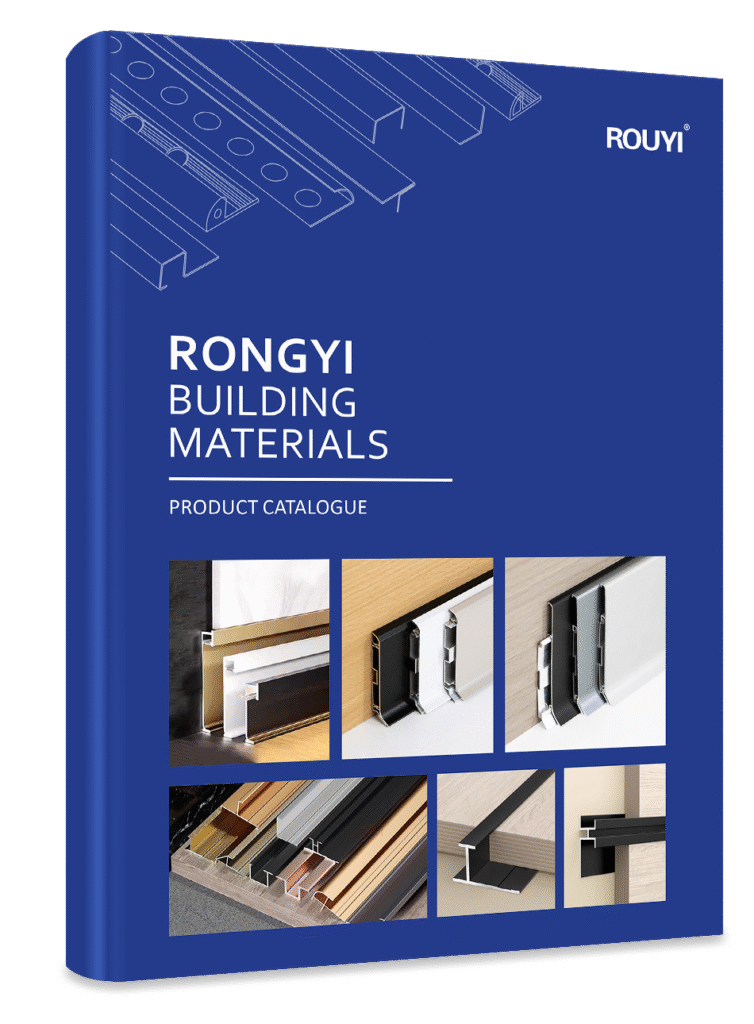
At RONGYI, with over 16 years of specialization, we don’t just sell skirting boards; we provide engineered wall-floor transition systems. Our core expertise in aluminum and stainless steel profiles ensures:
Project-Ready Durability: Products built to withstand commercial demands.
Precision & Consistency: Reliable quality for seamless large-scale installations.
Customization Capability: OEM/ODM services for unique profiles, colors (full RAL matching), and lengths.
Upgrade your project specifications. Contact our technical team for BIM files, material samples, and bulk pricing tailored for trade and wholesale. Let’s build interiors that are as durable as they are designed.